

Why Your WRX Needs a Turbo Inlet Upgrade
WHY YOUR WRX NEEDS A TURBO INLET UPGRADE
If you knew that a specific part in your engine bay was causing your vehicle to lose boost, slow down your throttle response, and potentially leave you stranded on the side of the road, would you immediately jump to replace it? Well, there is no need for the question, because of course you would and the OEM WRX Turbo Inlet is no exception.
The OEM Turbo Inlet on your VA WRX is made from molded plastic. Yes, that is correct, the OEM version is a plastic component known for its cracks and leaks. While the VB WRX Turbo Inlet was upgraded to aluminum, it still leaves performance and reliability on the table. The shortcomings of these OEM turbo inlets for the WRX platform revolve around 2 main things:
-
Brittle construction
-
Inefficient design
When exposed to heat and pressure, plastics expand and contract. This process happens over and over to your VA turbo inlet as your vehicle spools for boost, lets off at idle or rests between shifts. This constant heat and pressure, as the inlet supplies vacuum and boost to the turbo, causes this plastic inlet to crack, break, and separate over time, leading to boost leaks.

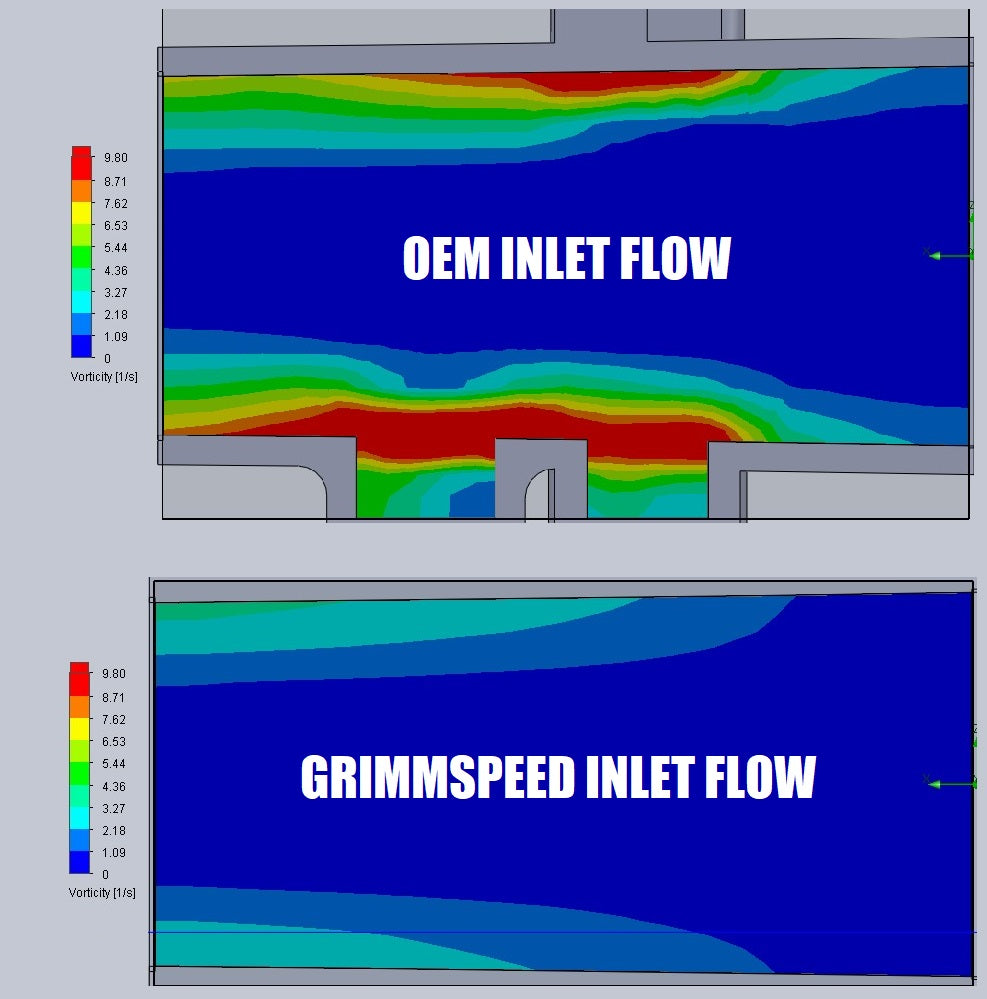
Which brings us to our second point, inefficient design. Boost leaks are when air leaks out before it can get to the engine or turbo, causing slower spooling, less cooling, and less efficiency overall: Three things you definitely don’t want.. The OEM Turbo Inlet on both the VA and VB is built in a way where it is guaranteed to leak and restrict air, leaving precious power gains on the table and who wants that?
 WHAT DOES A TURBO INLET DO?
In basic terms, the turbo Inlet is what connects the intake system to your engine. In order for the turbo to spool, it needs air from the environment. So, the intake sucks air into the system and passes it through the turbo Inlet, where it is directed to the turbo/engine for performance. The turbo inlet can be thought of as air’s “final” stop before entering the turbo for spooling. Because airflow is directed right through the turbo inlet, your turbo inlet piping and design is crucial for performance. The OEM turbo inlet and turbo inlet piping are designed with rigid edges, pockets, and leaks causing inefficient air flow, leaving you all the reason to upgrade.
WHAT ARE THE BENEFITS TO UPGRADING?
The benefits to upgrading are preventative maintenance, increased power, and more engine efficiency. As noted above, the VA factory turbo inlet is made from brittle plastic that tends to break due to heat and pressure exposure. Now, Subaru got smart and designed the VB version in aluminum, but both factory turbo inlets are still inefficient with their airflow and engine longevity protection. Long-term inefficiencies can wear down engine components, such as the turbo, through debris ingestion, oil seal damage, or bearing wear due to shaft play. An aftermarket turbo inlet can provide protection for these expensive and crucial power components.
A more efficient engine can create power easier, run cooler, and use less fuel as a result. By upgrading your turbo inlet to a more efficiently designed option, your engine can get cooler air faster and more efficiently, allowing it not only to run better but also to produce more power.
As air is pushed into the engine, the turbo spools faster and creates more power and airflow for your engine to use. So, if you are looking to protect your engine from damage, give it better performance, and increase power - a turbo inlet upgrade is inevitable.
DOES THIS REQUIRE A TUNE?
The great thing about aftermarket turbo Inlets for the VA and VB WRX is that they do not require any tuning. These components are a more efficient design of the factory turbo inlet but do not alter the factory setup to the point of needing a tune. This makes the turbo inlet upgrade attractive for all enthusiasts. The ones who daily drive and the ones out to race. No matter what you use your WRX for or how stock your set up is, this upgrade is easy, and the results are unavoidable.
HOW DOES THE CAST ALUMINUM COMPARE TO SILICONE?
Both choices are better than the OEM Turbo Inlet, but let’s break down silicone versus cast aluminum.
First, the pros for silicone are that it is cheaper to manufacture, making it a more affordable option for those on a budget. It is more flexible, which allows for easier installation in tight engine bays and spaces and it holds up to heat well (just not as well as aluminum). Silicone also absorbs sound more for those seeking a smoother intake sound. The cons are that it can degrade over time from debris, oil, and heat, as it is not as durable as aluminum. It is also less aesthetically pleasing to some due to its limited color options and typical silicone finish.
For aluminum options, the pros are that it is very durable and resistant to wear and tear. It is less likely to degrade or crack over time compared to silicone. Performance-wise, aluminum can dissipate heat better, allowing for potentially cooler intake temperatures and improved performance. The drawbacks of aluminum are in its rigid material, which can make it harder to install. Due to the material, the aluminum version is also going to amplify turbo sounds more, which some enthusiasts desire and some do not prefer. Weight-wise, aluminum is going to be heavier, but with small components, this is a very minor detail.
If you’re after a quieter intake sound and easier installation, a silicone pipe might be the way to go. If you want better heat dissipation, increased durability, and a louder intake sound, an aluminum pipe would be the better choice.

SO WHICH ONE DO I PICK?
If you are balling on a budget and have no room to spare, the silicone options are going to be budget and install friendly while still eliminating the shortcomings of the OEM component. Silicone will give you better performance, eliminate boost leaks, and protect your turbo and engine components from unnecessary damage.
For those with more of a budget, the aluminum option is a no brainer. Unless you are looking for the quieter option, the aluminum version is going to provide the most efficiency, last the longest, and, in our opinion, sound the best.
Either way, upgrading from the OEM Turbo Inlet is a win, and choosing an option that suits you best is what we always recommend.
WHAT BRAND HAS THE BEST TURBO INLET?
So now you understand why your OEM Turbo Inlet needs replacing, what it does, what material suits you best and you’re asking yourself what brand should I choose? Let’s break this down.
Best Turbo Inlets for the 2015-2021 Subaru WRX
#1) GrimmSpeed V2 Cast Aluminum Turbo Inlet (Overall Pick)
GrimmSpeed is the best balance of price, durability, fitment, and “future-proof” street performance. The GrimmSpeed V2 Turbo Inlet combines the 2015–16 and 2017–21 fitment into one kit via interchangeable fittings, uses A380 cast aluminum, includes Viton O-ring and clamps, and does not require tuning. It is also specifically engineered around the GrimmSpeed EBCS, which is helpful if you’re already in that ecosystem.

#2) COBB Tuning Cast Turbo Inlet (CARB compliant)
COBB provides the most polished mainstream option, and the one with the clearest “OEM-plus” and legal/compliance angle. COBB says it is 50-state legal (for our Cali friends), uses cast aluminum, and expands the inlet ID to 70mm. It also matches the compressor inlet at 50mm, includes provisions for stock or COBB EBCS, and adds flats for aux sensors. That makes it the safest premium choice, especially for buyers who care about compliance and brand confidence.
#3) OVERTAKE Aluminum BIG TURBO Inlet (Aftermarket Turbos)
Overtake is our third recommendation. This option is not “worse” than the others; it is just more specialized. OVERTAKE says the Big Turbo version opens the turbo flange from 49mm on the standard version to 54mm specifically for larger stock-location turbos like the Forced Performance Blue. For a stock turbo car, this is usually more part than you need. For those running big after market turbos, OVERTAKE has you covered.
Best Turbo Inlets for the 2022-2026 Subaru WRX
#1) OVERTAKE Aluminum Turbo Inlet (Overall Pick)
There are not currently many options on the market for the VB WRX. OVERTAKE was the first to the party and offers their quality turbo inlet option that removes the VB WRX’ leaky factory turbo inlet and upgrades to their Aluminum Turbo Inlet design. This high-strength aluminum piece increases airflow and improves on two big flaws in the factory inlet (coolant routing and boost leaks) , allowing for superior intake temperatures and better boost response - making this a superior choice for our VB owners!
#2) Overtake BIG Turbo Inlet (Aftermarket Turbos)
For our power freaks! If you are running an upgraded turbocharger on your FA24, this option is perfect for you! The standard OVERTAKE 2022+ WRX Aluminum Turbo Inlet is designed around the stock inlet diameter of 49.5mm, but we have opened up the BigTurbo Version turbo flange to 54.5mm to account for larger aftermarket turbochargers. If you are running an aftermarket big turbo this is the one for you!
Honorable Mention: COBB Tuning Cast Turbo Inlet (CARB Compliant)
At the time of writing, COBB currently does not offer a turbo inlet for the VB WRX platform; however, they have teased this option. If/when they do release the turbo inlet, we will highly recommend it for California owners due to the CARB compliance!
INSTALLATION PROCESS
For the VA WRX:
-
Unbox the unit
-
Raise car via lift or jackstands
-
Remove skid plate
-
Locate inlet (passenger side just behind the bumper)
-
Remove intake hose(s)
-
Undue clips and hoses connected to inlet and boost controller
-
Disconnect bypass valve via clamp
-
Remove two bolts from turbo
-
Remove OEM turbo inlet from the vehicle
-
Remove factory 2 port boost controller from factory inlet
-
Reinstall boost controller and factory components onto aftermarket turbo inlet
-
Reinstall unit using factory hardware and components
-
Make sure boost controller is connected and all clamps are tightened
-
Enjoy the peace of mind of a happier and healthier engine
NOTE: Follow all manufacture instructions as specific installation instructions may vary
For the VB WRX:
-
Unbox the unit
-
Raise car via lift or jackstands
-
Remove skid plate
-
Locate inlet (passenger side just behind the bumper)
-
Remove intake hose(s)
-
Undue clips and hoses connected to OEM inlet and boost controller
-
Remove two bolts from turbo
-
Remove OEM turbo inlet from the vehicle
-
Remove any factory components from OEM unit
-
NOTE: 2025+ models have PCV block that needs to be transferred to new unit
-
Set up new inlet with aftermarket fittings
-
Reinstall unit using factory hardware and components
-
Make sure everything is connected and clamps are tightened (coolant lines, intake hoses, clamps)
-
Enjoy the peace of mind of a happier and healthier engine
NOTE: Follow all manufacture instructions as specific installation instructions may vary