

What is the purpose of a Bypass Valve for the Subaru WRX?
Best WRX Bypass Valve Options
Best for high boost / tuned cars: GrimmSpeed V2 Bypass Valve 2015-2021 WRX
The GrimmSpeed V2 Bypass Valve is widely considered the top choice for tuned WRXs due to its strong performance, reliability, and ability to hold higher boost levels consistently. It is often seen as the safe and proven upgrade.
Best OEM+ feel: COBB LF Bypass Valve 2015-2021 WRX
The COBB LF Bypass Valve comes in close behind, offering excellent drivability and refinement. It is designed to feel very close to OEM while improving sealing and response, making it a great option for both stock and tuned setups.
Best for Customization: Perrin Bypass Valve 2015-2021 WRX
The Perrin Performance Bypass Valve is a solid middle-ground option. It offers good durability and maintains a fully recirculating design, making it ideal for daily drivers and mildly modified cars.
Best for sound / personality: Boomba Bypass Valve 2015-2021 WRX
The Boomba Racing Bypass Valve focuses more on sound and character. While it still performs well, it may be slightly more aggressive depending on the setup and is generally chosen more for preference than outright performance.
What is the Purpose of a Bypass Valve for the 2015-2021 Subaru WRX?
If you are trying to understand how a bypass valve works on a Subaru WRX or whether you should upgrade yours, this guide breaks it all down. We will cover what a bypass valve does, how it compares to a blow-off valve, and whether upgrading your WRX bypass valve is worth it.
What Does a Bypass Valve Do?
Turbocharged engines use forced induction, which essentially means that the engine uses an intake system to force cold air into the engine. While running and under throttle, air is forced into the system, passes through the turbo, is sent to the intercooler, then through the throttle body, and finally into the engine before exiting through the exhaust.

The issue comes when the driver lets off the gas after being under boost. The extra air that was being forced through the system now has nowhere to go because the throttle body closes. This pressurized air stays in the system and can route back toward the turbocharger through the charge pipe. This creates the turbo flutter we all love, but over time it can create wear and stress on the turbo.
This is where the bypass valve comes into play. The bypass valve relieves this pressure by redirecting excess boost to prevent premature wear on the turbo. Bypass valves work by recirculating the boost back into the intake system before the turbocharger inlet but after the MAF sensor, creating a closed-loop system. This is why it is also called a recirculating valve.
A blow-off valve works to route unused boost and pressure as well to keep your turbo and engine safe, but instead of routing it back into the intake system, it releases it into the atmosphere. We will dive into the difference in the section below: WRX bypass valve vs blow-off valve.
But essentially, the WRX bypass valve takes the extra boost and air pressure that is built up under throttle and routes it back into the intake system to keep your turbo safe from damage and your engine running smoothly.
Bypass Valve vs Blow-Off Valve: What is the Difference?
We touched on this briefly in the prior section, but there is one main difference between a bypass valve and a blow-off valve, and it comes down to what each valve does with the extra air in the system when the throttle body is closed.
The bypass valve takes that remaining air and routes it back into the intake system, where the computer accounts for it via the MAF sensor and sends it back through the system. This is a closed-loop system.
The blow-off valve releases all of this air into the atmosphere instead of routing it back through the system. This is an open-ended system. Now you are probably wondering, what is the real difference? Don’t they do the same thing? Yes and no.

Bypass valves are quieter, have less turbo lag, and provide better spool characteristics. They are well suited for stock or lower boost ranges and maintain smooth drivability.
Blow-off valves typically have faster response times, can handle higher boost levels, and produce the well-known “whooshing” sound, but they can introduce turbo lag, increased noise, and drivability issues on MAF-based systems like the WRX.
Why Subaru Uses a Bypass Valve (WRX-Specific)
Pretty much all turbocharged cars from the factory come designed to run with a bypass valve, and the WRX is no exception. At stock boost levels, without a larger turbo or upgraded boost control components, the bypass valve is exactly what the engine is designed to run efficiently with. The MAF sensor and ECU are calibrated for this setup. Stock boost on a WRX typically ranges from 15–19 PSI, which does not require a blow-off valve.
Blow-off valves are only needed in specific high-boost situations where there is so much excess pressurized air that forcing it back into the system could contribute to compressor surge. Compressor surge occurs when pressure overpowers the compressor, causing airflow to reverse direction and resulting in a fluttering or chirping sound. This can be extremely harmful to your turbo and overall engine health.
That said, on the WRX platform, an upgraded recirculating bypass valve is typically the better solution. The WRX is designed to recirculate air back into the intake system to maintain proper air-fuel ratios and drivability between shifts. While it is possible to run a vent-to-atmosphere blow-off valve, this is only recommended for cars running speed density tuning (vehicles that are not relying on a MAF sensor), which are usually more specialized builds.
Running a blow-off valve on a stock Subaru WRX setup will cause the car to run rich, introduce turbo lag, slow response, and cause stuttering. Over time, this can lead to poor fuel economy, damaged catalytic converters, backfires, inconsistent RPM behavior, and, in some cases, make the vehicle difficult to drive. This happens because the MAF sensor and ECU still think the air is in the system, even though it has been vented to the atmosphere.
By recirculating the boost back to the turbo inlet, a WRX BPV keeps the intake system pressurized and the turbocharger in a better state for immediate power when getting back on the throttle, reducing lag.
The WRX calculates fuel based on air passing through the MAF sensor. A BPV recirculates this already metered air back into the intake, whereas a BOV vents it, causing the ECU to deliver too much fuel and resulting in a rich condition.
Do You Need to Upgrade Your WRX Bypass Valve?
The main reason to upgrade your bypass valve on your WRX is that the OEM unit has limitations. The small outlet on the factory BPV can restrict how quickly boost is relieved, and the plastic construction is more prone to leaks and long-term wear.

If you are running a completely stock WRX, do you have to upgrade your bypass valve? No. However, it is highly recommended if you are looking for improved reliability, better boost control, and quicker response.
It is also worth noting that stock BPVs are known to leak under higher boost levels. In some cases, upgrading to an aftermarket WRX bypass valve has resulted in noticeable gains, including around 15 horsepower and 9 lb-ft of torque, simply by eliminating boost leaks. Those are real gains!
Benefits of Upgrading Your WRX BPV
The benefits of upgrading are straightforward. You gain peace of mind knowing your BPV is not leaking and leaving performance on the table. A stronger, better-designed valve improves boost consistency, throttle response, and overall efficiency.
Upgraded bypass valves also feature better internal components that can handle higher boost levels, making them ideal if you plan to run a larger turbo or push more power in the future.

Do You Need a Tune for a WRX Bypass Valve?
One of the best parts about upgrading to a bypass valve is that, in most cases, you do not need a tune, as long as you are using a fully recirculating BPV.
It is very important to make sure the valve is 100% recirculating on a Subaru WRX. Running a blow-off valve or hybrid valve without proper tuning can throw off MAF readings and cause drivability issues.
That said, if you are running an aftermarket turbo or other major power modifications, it is always a good idea to inform your tuner of your BPV/BOV setup so they can optimize everything for best performance. But for a standard recirculating WRX bypass valve upgrade, a tune is not required.
Symptoms of a Failing WRX Bypass Valve
A failing bypass valve on a Subaru WRX will typically cause a loss of boost pressure, leading to sluggish acceleration and inconsistent throttle response. You may also notice a high-pitched whistling or fluttering sound under load.
Other symptoms can include rough or unstable idle, stalling, and check engine lights related to underboost conditions.
The good news is that you are going to upgrade before you have a failing BPV. Don’t wait until you are stranded. Upgrade your WRX bypass valve and ride around in comfort and peace of mind, knowing your BPV is ready for all you plan to throw at it.
How to Choose the Right WRX Bypass Valve
Choosing the correct aftermarket bypass valve for your WRX can feel overwhelming, but it does not have to be.
While the stock bypass valve does have its limitations, most reputable aftermarket brands offer solid options that will work well for your setup.
The main things to consider are how much boost you are running or plan to run, your budget, and your overall goals for the car. For most users, any of the major brands will perform well, so it ultimately comes down to what fits your needs best.
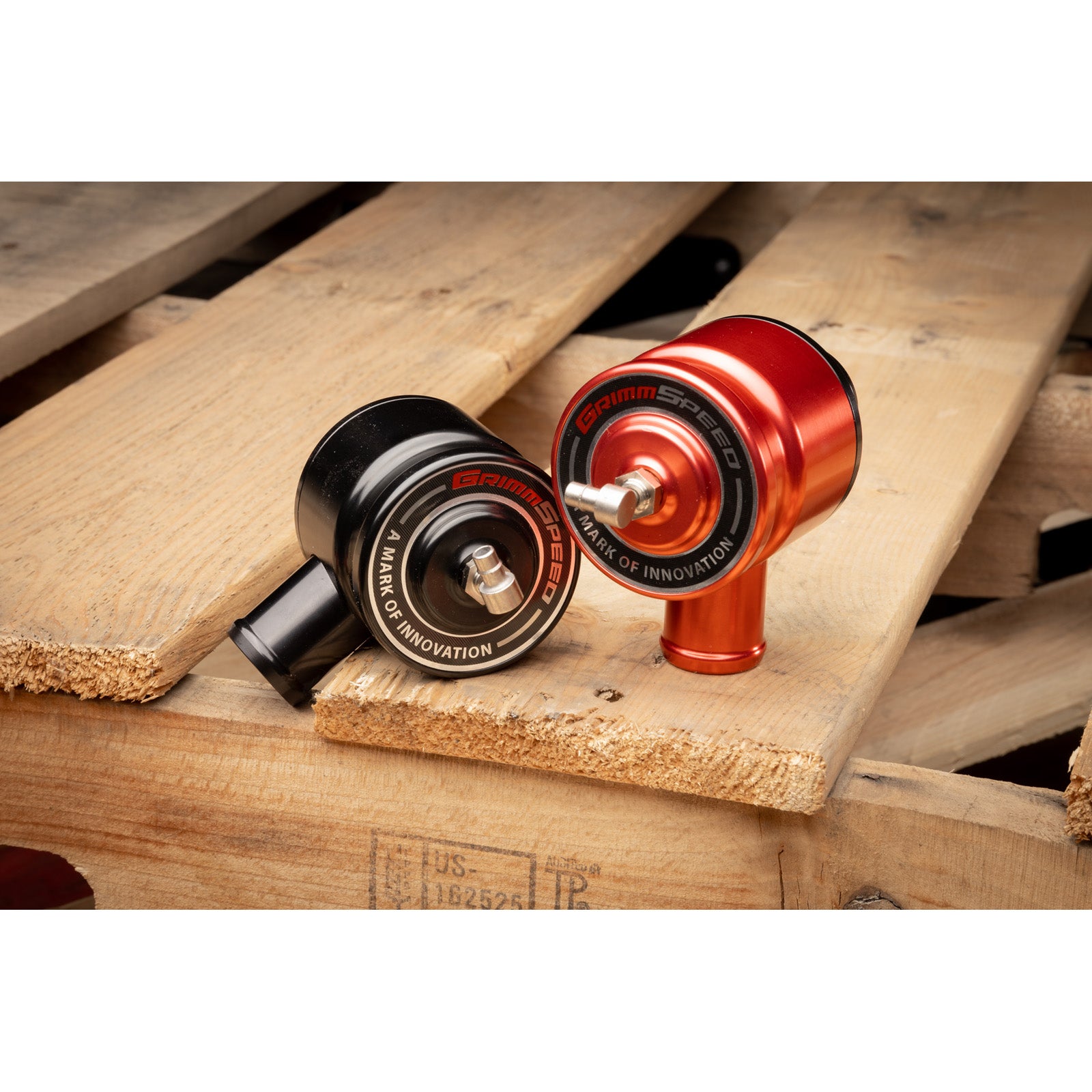
WRX Bypass Valve Installation Overview
Installing an aftermarket bypass valve is one of the easier upgrades you can do on a WRX.
Follow these general steps, but always refer to the manufacturer’s instructions for your specific part, as installation can vary slightly depending on brand and model year.
Start by removing the vacuum lines attached to the factory BPV. Then remove the hose clamps and use a ratchet and socket to take off the bolts holding the BPV in place. Carefully remove the BPV from the recirculation hose using pliers if needed, and then remove the valve completely.
Next, remove the old gasket, which may require a razor blade if it is stuck. Transfer over any necessary fittings to the new BPV, then reconnect the recirculation hose.
Install the new BPV using the provided hardware, tighten it down with a socket and ratchet, and reconnect the vacuum lines. Finally, secure any loose hoses with zip ties as needed.